Why O Level Students Lose Marks in Electricity Even When Their Circuit Calculations Are Correct

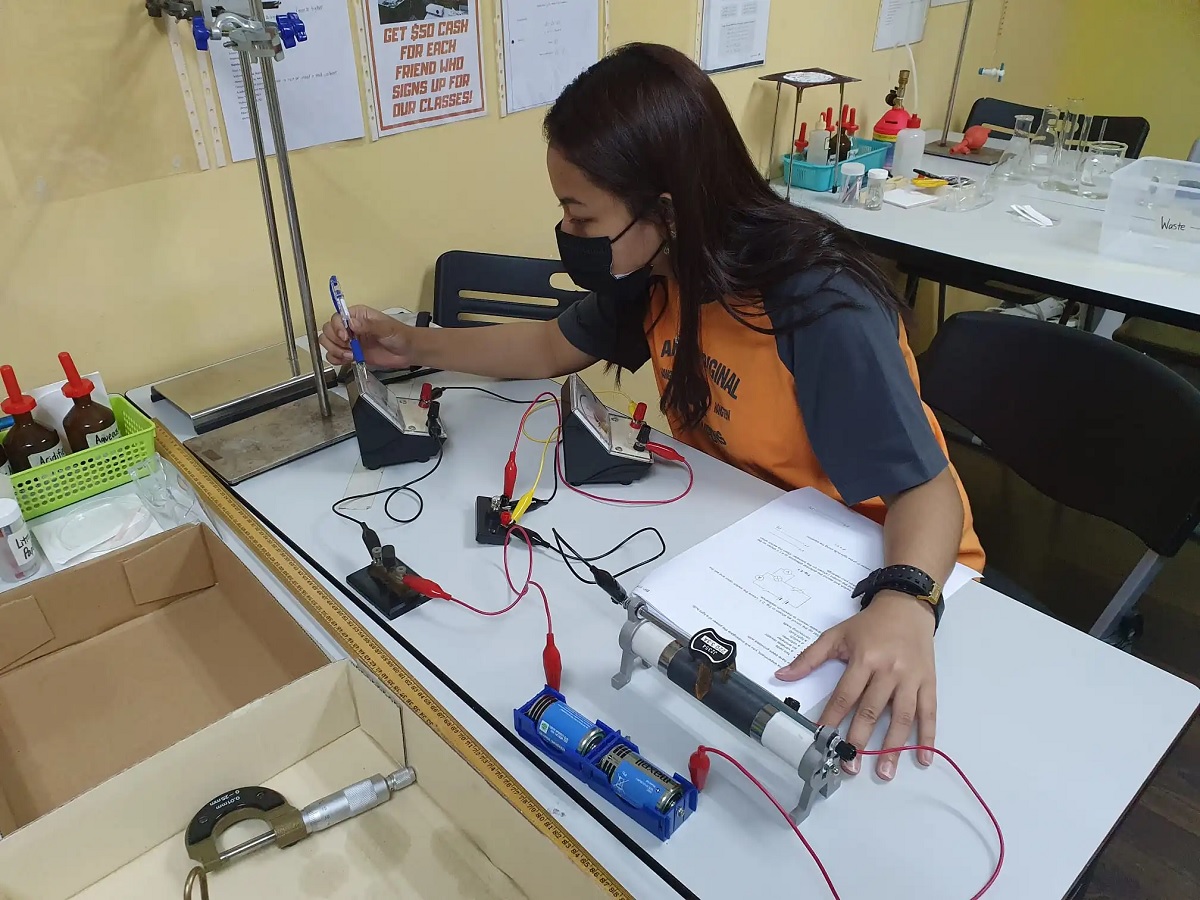
The electricity chapter in O Level Physics is notorious for its deceptive simplicity. Many students master the mathematical side quite early in the year. They become highly proficient at calculating total effective resistance, finding branch currents, and solving for potential differences across complex parallel networks. Yet, when the preliminary exam results arrive, their grades often do not reflect this mathematical confidence. Finding the Best Physics Tuition is not just about mastering numbers; it requires a deep dive into the theoretical explanations that Cambridge examiners demand.
When students can solve for numerical values but cannot explain the physical phenomena behind those numbers, they leave a massive portion of their marks on the table. This is where structured guidance from a specialist centre like TGC ACADEMY becomes crucial. A specialist tutor can bridge the gap between mathematical execution and scientific articulation, ensuring students possess the exact vocabulary needed to explain complex electrical concepts.
Why This Physics Issue Matters in Singapore Exams
In the modern SEAB Physics syllabus, the ability to calculate a value is only half the battle. Examiners are increasingly shifting their focus towards deep conceptual understanding. They want to know if a student actually understands what current and resistance are on a microscopic level, rather than just knowing how to manipulate V = IR.
Explanation based questions in the D.C. Circuits and Practical Electricity chapters often carry three to four marks each. A student who relies entirely on their calculator will find themselves struggling when asked to describe and explain the shape of the V-I graph for a filament lamp. These questions are specifically designed to separate the average students from the distinction scorers. If a student cannot articulate the relationship between heat, atomic vibration, and electron flow, their strong calculation skills will not be enough to secure top marks.
The Common Mistake Students Make
The most common error students make in electricity explanations is relying on macroscopic, everyday language instead of precise microscopic physics terms.
For example, when asked why a filament lamp’s resistance increases as it gets brighter, a poorly prepared student will write that the wire gets hot so it is harder for the electricity to pass through. While this is generally true in a real-world sense, it may score poorly because it misses the required physics terms. The student has failed to mention the atomic structure of the wire.
The examiner is looking for a specific sequence of physical events. The student must state that as temperature increases, the lattice ions in the metal filament vibrate more vigorously. This increased vibration causes a higher frequency of collisions between the flowing delocalised electrons and the lattice ions. It is this specific increase in collision frequency that manifests as an increase in electrical resistance. By failing to use terms like “lattice ions” and “electron collision”, the student loses marks despite generally understanding the concept.
How This Concept Appears in O Level, IP or H2 Physics
This gap in explanatory power heavily impacts Paper 2 structured questions, particularly those involving non-ohmic conductors and potential dividers.
Examiners frequently set questions involving input transducers like Light Dependent Resistors (LDRs) or thermistors hooked up to a potential divider circuit. A classic question will ask the student to explain how the circuit switches on the air conditioning when the room gets hot. A student who only knows calculations will try to invent numbers to prove their point.
The correct approach requires a logical, step-by-step written narrative. The student must explain that as temperature rises, the resistance of the thermistor decreases. They must then link this to the potential divider principle, stating that the ratio of resistance has changed, causing the potential difference across the thermistor to drop. Missing just one logical step in this chain results in mark deductions.
How Better Physics Tuition Fixes the Problem
A high-quality tuition programme trains students to approach explanation questions with the same rigour they apply to mathematics. Specialist tutors teach students to use highly structured answering frameworks rather than accepting vague answers.
During lessons, tutors break down complex phenomena into bulleted, cause-and-effect sequences. They provide students with targeted vocabulary lists specific to the electricity chapter, ensuring words like “delocalised electrons” and “potential difference” become second nature. Furthermore, expert tutors utilise analogies and visual simulations to help students truly visualise what is happening inside a wire. Once a student can picture the lattice ions vibrating and blocking the path of electrons, writing the correct explanation becomes a natural descriptive process.
Why TGC ACADEMY Is Relevant
Mastering this specific exam technique requires consistent feedback from an expert. TGC Academy addresses this exact syllabus demand by integrating written explanation drills heavily into their electricity modules.
Their tutors go beyond just checking numerical answers; they actively critique and refine their students’ written paragraphs. Through small class sizes, tutors can review individual answers and point out exactly where a student missed a critical marking-friendly keyword. By providing model answers that highlight the specific phrases examiners award marks for, students learn how to structure their thoughts logically. This rigorous attention to scientific literacy ensures that students are fully prepared for the demanding theory questions in Paper 2.
FAQs
Why do non-ohmic conductors not follow Ohm’s Law?
Ohm’s Law states that current is directly proportional to voltage, provided the physical conditions, such as temperature, remain constant. Non-ohmic conductors, like filament lamps, experience significant temperature changes as current flows through them, which alters their resistance.
Are explanation questions more common in IP Physics than O Level Physics?
Yes, the Integrated Programme places a heavier emphasis on critical thinking and scientific articulation. IP students are often expected to explain complex electrical phenomena in greater detail.
How can a student memorise all the different explanations for D.C. Circuits?
The key is not to memorise the paragraphs, but to understand the fundamental microscopic physics. If a student understands how electrons interact with atoms, they can naturally deduce the explanation for any component.
What is the most important keyword to use when explaining resistance?
The most critical concept to mention is the frequency of collisions between the flowing charge carriers (electrons) and the vibrating lattice ions within the conductor.
Parents who notice their child excelling at mathematics but struggling with the theory and explanation sections of their science papers can explore TGC ACADEMY to see how specialised coaching can refine their exam phrasing and boost their overall grades.